SOLUTIONS / AGGREGATE CRUSHING
Aggregate Crushing Plant Solutions
Customized Stone Crushing and Screening Systems for Quarrying, Mining and Aggregate Production
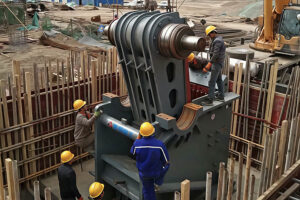
Aggregate Crushing Solutions for Your Project
LBZG Crusher provides crushing and screening equipment for aggregate production projects. Whether you are processing limestone, granite, basalt or river pebbles, the appropriate configuration depends on your raw material characteristics, required production capacity and finished aggregate specifications.
Our team can help you evaluate suitable equipment combinations for your project. A typical system may include feeding, primary crushing, secondary crushing, screening and material conveying.
Define Your Project Requirements
Share your material, maximum feed size, required capacity, finished product sizes and project location. We can discuss a suitable preliminary crushing configuration.
1. Suitable Materials and Applications
Aggregate crushing plants are commonly used to process:
- Limestone: Aggregate production, road construction and concrete applications.
- Granite: Hard-rock crushing and graded construction aggregates.
- Basalt: Production of aggregates from hard and abrasive rock.
- River Pebbles: Crushing and screening for aggregates and selected sand-making applications.
- Other Quarry Materials: Subject to material testing and equipment suitability.
The crushing process should be selected according to material hardness, abrasiveness, moisture content and feed characteristics.
2. Typical Aggregate Crushing Process
A conventional stationary aggregate crushing plant may include the following stages.
Step 1 — Material Feeding
A vibrating feeder delivers raw stone to the primary crusher at a controlled rate.
Step 2 — Primary Crushing
A jaw crusher reduces larger rocks to a size suitable for downstream processing.
Step 3 — Secondary Crushing
A cone crusher or impact crusher further reduces the material, depending on its hardness, abrasiveness and required product characteristics.
Step 4 — Screening
A vibrating screen separates crushed material into the required size fractions. Oversized material can be returned to the crushing circuit.
Step 5 — Finished Aggregate Collection
Conveyors transfer the finished products to designated stockpiles or subsequent processing equipment.
Additional shaping or fine-crushing stages may be required depending on the project.
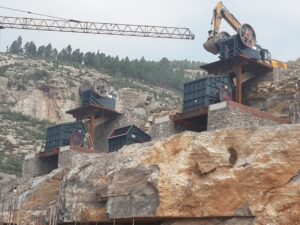
3. Recommended Crushing and Screening Equipment
| Equipment | Main Function |
|---|---|
| Vibrating Feeder | Controlled feeding of raw materials |
| Jaw Crusher | Primary size reduction |
| Cone Crusher | Secondary or tertiary crushing, especially for hard and abrasive materials |
| Impact Crusher | Crushing applications where material properties and product requirements are suitable |
| Vibrating Screen | Classification of finished aggregate sizes |
| Belt Conveyor | Material transfer between processing stages |
| VSI Sand Making Machine | Optional shaping and manufactured sand production |
The final equipment selection and model sizes must be confirmed after reviewing the project requirements.
4. Production Capacity and Plant Configuration
LBZG can discuss different crushing and screening configurations based on the customer’s production objectives.
Example planning ranges include:
- 50–80 TPH: Smaller aggregate production projects.
- 100–150 TPH: Medium-capacity crushing applications.
- 200–300 TPH: Higher-capacity aggregate production requirements.
These ranges are preliminary project planning categories, not guaranteed capacities or confirmed LBZG equipment packages.
Actual plant performance depends on feed conditions, material characteristics, crusher settings, screening efficiency and operating arrangements.
5. Key Factors in Selecting an Aggregate Crushing Plant
Before choosing equipment, consider the following:
Material Characteristics
Identify the rock type, hardness, abrasiveness and moisture conditions.
Maximum Feed Size
Provide the largest expected feed size to help determine suitable primary crushing equipment.
Required Capacity
Specify the target production capacity in tons per hour.
Finished Aggregate Sizes
Confirm the required size fractions, such as 0–5 mm, 5–10 mm, 10–20 mm or other project-specific products.
Installation Conditions
Share the country, installation site, available electricity, space limitations and site accessibility.
Stationary or Mobile Operation
A stationary plant may suit long-term production at a fixed location. Mobile configurations may suit projects requiring relocation, subject to equipment availability and operating conditions.
6. Why Discuss Your Project with LBZG Crusher?
LBZG Crusher focuses on crushing, screening, sand processing and related equipment for international customers.
We can assist with:
- Preliminary crusher and screening equipment selection.
- Discussion of processing stages and equipment combinations.
- Review of material and target capacity requirements.
- Equipment specifications and quotation preparation.
- Communication about installation conditions and project requirements.
Final technical designs, equipment availability, delivery terms and service arrangements are subject to confirmation.
7. Frequently Asked Questions
Q1: What equipment is needed for an aggregate crushing plant?
A typical configuration may include a vibrating feeder, jaw crusher, secondary crusher, vibrating screen and belt conveyors. The actual equipment depends on material and production requirements.
Q2: Which crusher is suitable for hard granite or basalt?
Jaw crushers are commonly used for primary crushing, while cone crushers are frequently considered for secondary crushing of hard and abrasive rock. Final selection depends on the specific operating conditions.
Q3: Can one plant produce several aggregate sizes?
Yes. A properly configured screening system can separate finished aggregates into multiple size fractions, depending on screen design and crushing circuit performance.
Q4: Can the crushing plant also produce manufactured sand?
A sand-making and screening stage may be added when the material and finished product requirements are suitable.
Q5: What information is required to recommend a crushing plant?
Please provide the material type, maximum feed size, required capacity, finished product sizes, project location and available power supply.
8. Request a Customized Aggregate Crushing Solution
Planning an aggregate crushing project?
Send LBZG Crusher your project requirements, including:
- Raw material
- Maximum feed size
- Required capacity (TPH)
- Finished product sizes
- Installation country and site conditions
- Power supply requirements
Contact LBZG Crusher
Email: lbzg@lbcrusher.com
Sales WhatsApp: +86 15866938525
Marketing WhatsApp: +86 13953887097
Our team will review your requirements and discuss a suitable equipment configuration.