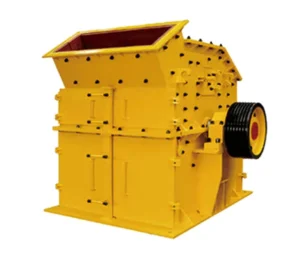
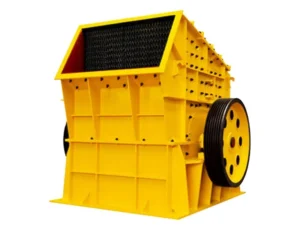
Continuous and Efficient Conveying
Supports smooth material transportation between crushing, screening, and stockpiling processes.
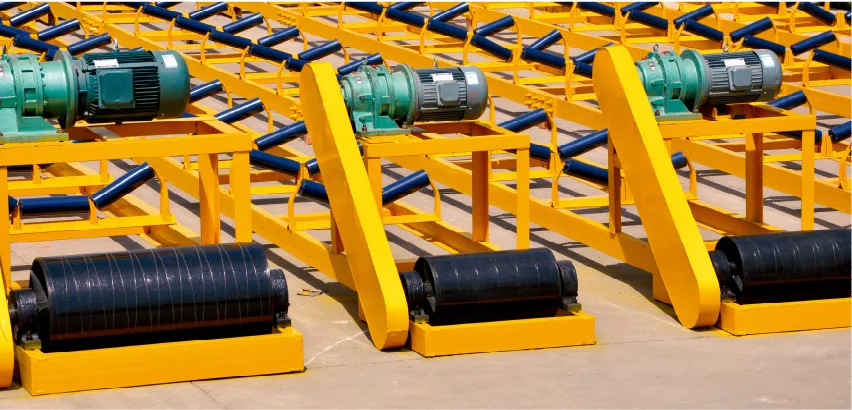
Material transport between stages of the production process.
Tell us your material, feed size and target capacity for model selection.
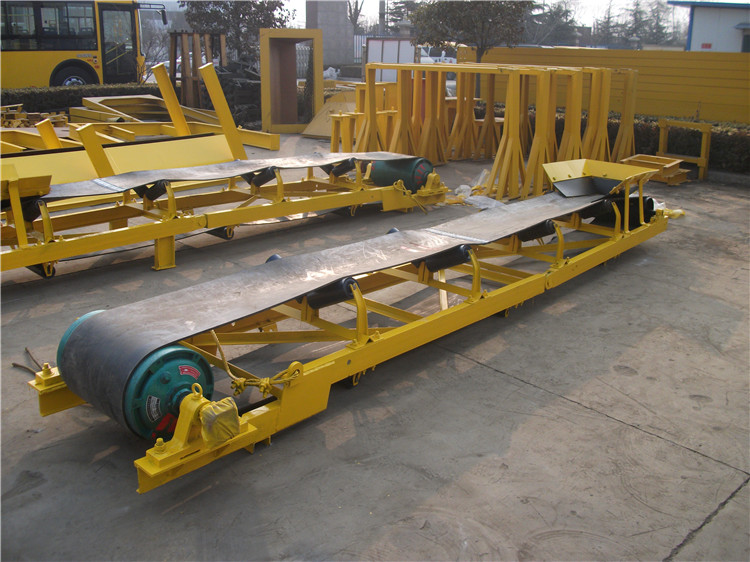
The LBZG BS Belt Conveyor is designed for continuous and efficient transportation of bulk materials in stone crushing, mining, quarrying, and aggregate processing plants. It plays an essential role in connecting different stages of production, ensuring smooth material flow between crushers, vibrating screens, and stockpiling areas.
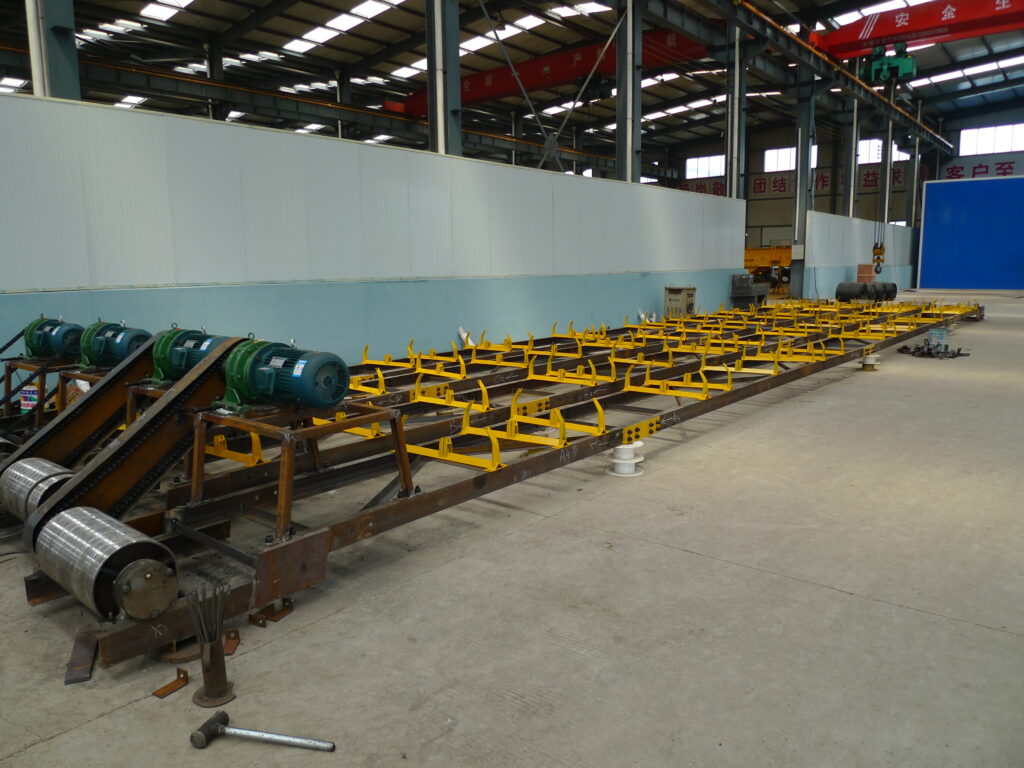
Featuring a robust steel frame, durable conveyor belt, reliable drive system, and supporting rollers, the BS Belt Conveyor is suitable for handling crushed stone, gravel, sand, ores, and other bulk materials. Its practical design supports stable operation, convenient maintenance, and flexible integration into various crushing and screening production lines.
LBZG offers belt conveyor configurations based on specific project requirements, including material characteristics, conveying capacity, belt width, transportation distance, and installation conditions.
Contact LBZG for suitable conveyor configurations and technical recommendations tailored to your production needs.
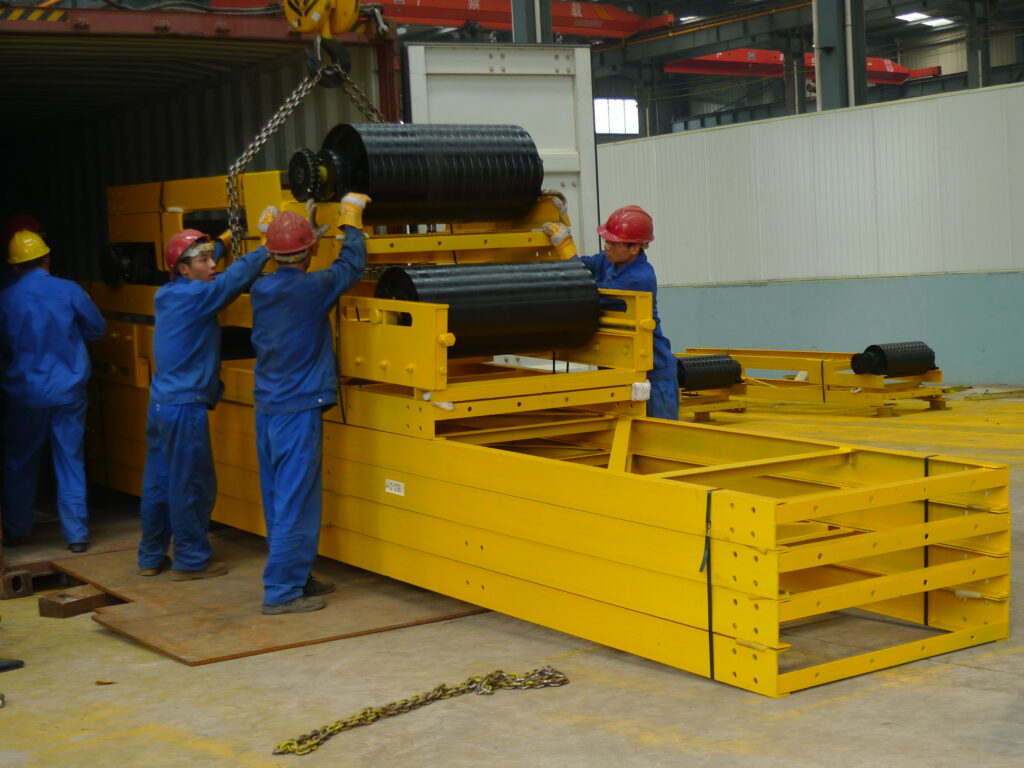
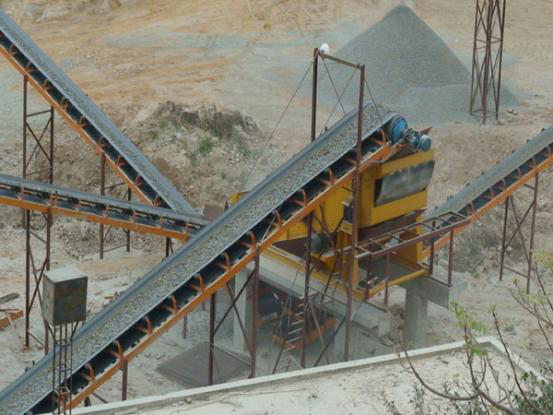
LBZG belt conveyors are widely used in stone crushing plants, aggregate production lines, quarries, mining operations, and sand processing facilities. They provide continuous material transportation between crushers, vibrating screens, washing equipment, and stockpiling areas.
• Versatile Applications: Suitable for transporting crushed stone, gravel, sand, ores, and other bulk materials.
• Reliable Material Handling: Supports continuous material flow and reduces manual handling requirements.
• Flexible Integration: Can be combined with jaw crushers, cone crushers, impact crushers, and screening equipment.
• Customizable Configurations: Belt width, conveyor length, inclination, and layout can be selected according to project requirements.
• Convenient Maintenance: A practical structural design allows access to key conveyor components for inspection and servicing.
The belt conveyor operates through a motor-driven transmission system. The electric motor transfers power to the drive pulley through a gear reducer, causing the conveyor belt to move continuously around the head and tail pulleys.
Bulk materials such as crushed stone, gravel, sand, and ores are loaded onto the moving belt at the feeding point. Supported by carrying idlers, the belt transports materials along the conveyor to the discharge end, where they are transferred to the next processing stage or stockpiling area.
Return rollers support the empty belt as it travels back to the loading end, while the tensioning device helps maintain proper belt tension. This continuous conveying process enables efficient material handling throughout crushing and screening production lines.
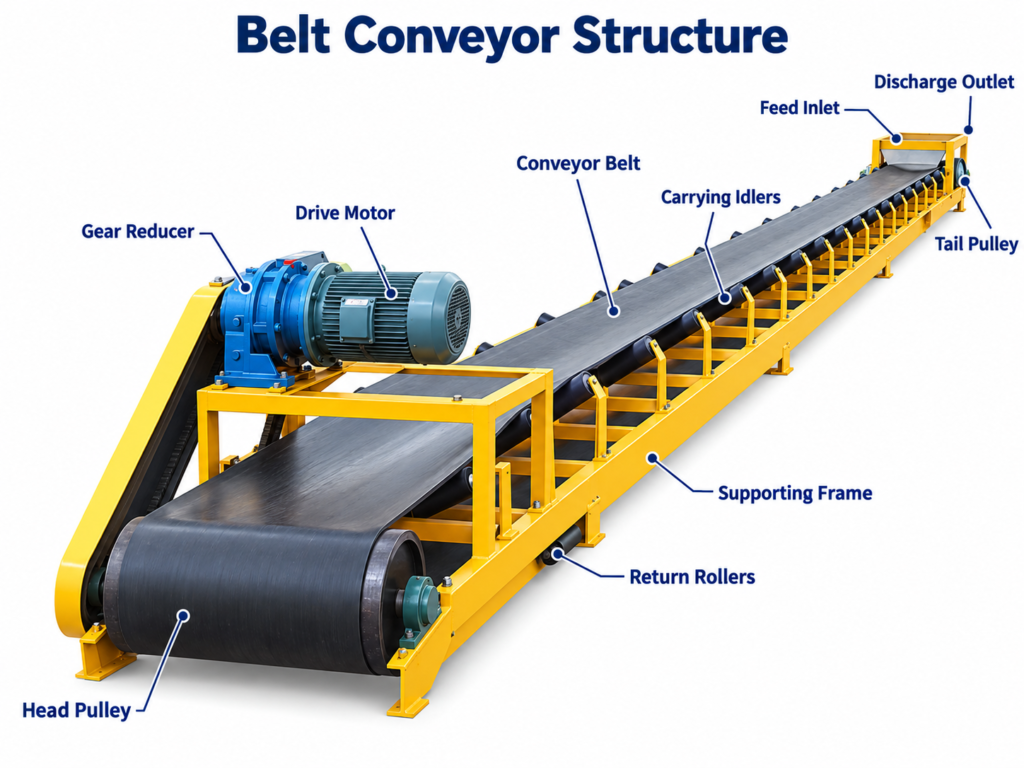
Supports smooth material transportation between crushing, screening, and stockpiling processes.
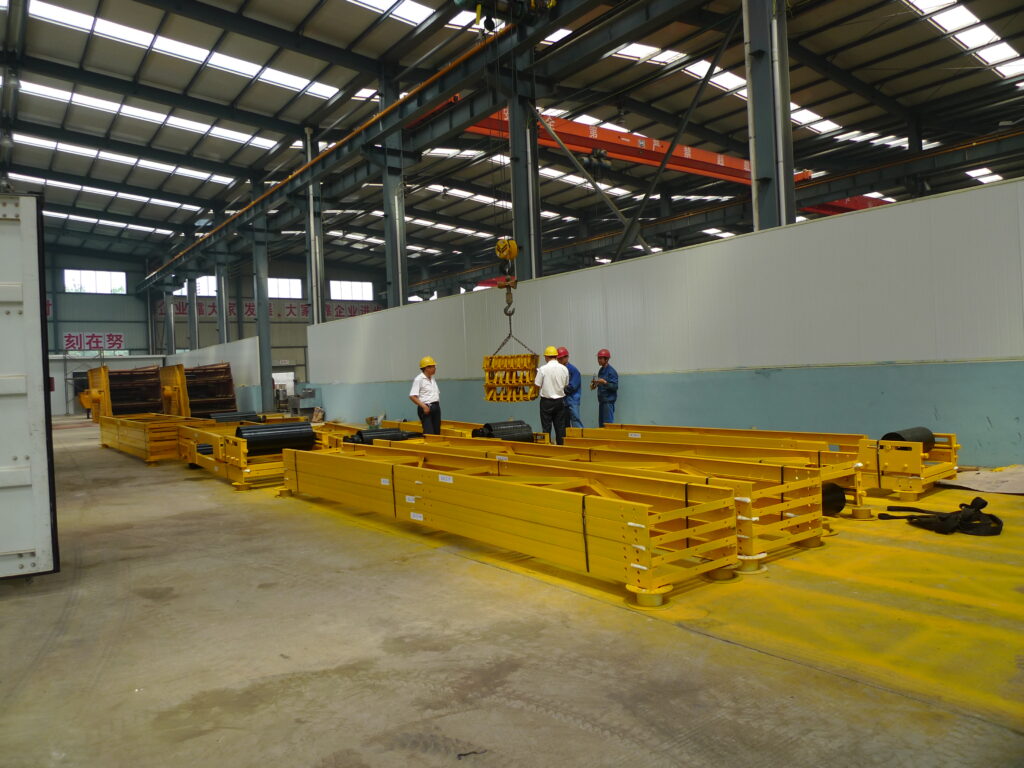
Heavy-duty supporting frame designed for industrial material handling applications.
Belt width, conveyor length, and inclination can be selected according to project requirements.
Motor and gear reducer provide power for continuous belt movement.
Suitable for crushed stone, sand, gravel, ores, and other bulk materials.
Accessible rollers, pulleys, and drive components facilitate routine servicing.
| Belt width(mm) | Belt length(catalogue unit not stated) — range 1 | Power(kW) — range 1 | Belt length(catalogue unit not stated) — range 2 | Power(kW) — range 2 | Belt length(catalogue unit not stated) — range 3 | Power(kW) — range 3 | Conveying speed(m/s) | Capacity(t/h) |
|---|---|---|---|---|---|---|---|---|
| 400 | ≤12 | 1.5 | 12-20 | 2.2-3 | 20-30 | 3-5.5 | 0.8-2.0 | 40-80 |
| 500 | ≤12 | 3 | 12-20 | 4-5.5 | 20-30 | 5.5-7.5 | 0.8-2.0 | 80-190 |
| 650 | ≤12 | 4 | 12-20 | 5.5-7.5 | 20-30 | 5.5-7.5 | 0.8-2.0 | 130-330 |
| 800 | ≤10 | 4 | 10-20 | 5.5-7.5 | 20-30 | 7.5-15 | 1.3-2.0 | 280-500 |
| 1000 | ≤10 | 5.5 | 10-20 | 7.5-11 | 20-30 | 11-18.5 | 1.3-2.0 | 430-850 |
| 1200 | ≤10 | 7.5 | 10-20 | 11-15 | 20-30 | 15-22 | 1.3-2.0 | 650-1200 |
Specifications are for reference only. Performance depends on material properties and operating conditions. Confirm the selected model and configuration with LBZG before ordering.
Ask about a suitable model →Identify the material size, bulk density, moisture content, and abrasiveness.
Determine the target conveying capacity in tons per hour (TPH).
Select a suitable belt width based on material size and transportation requirements.
Consider the horizontal distance, lifting height, and available installation space.
Evaluate working hours, environmental conditions, and maintenance accessibility.
Interested in BS Belt Conveyor? Share your project requirements with our team.
Tell us your material, target capacity and required output sizes so we can discuss the equipment and quotation scope.
Please provide the material type, maximum particle size, required capacity in TPH, conveying distance, lifting height, and installation conditions.
Share the material, transport rate, conveying length, elevation change and connection points.
Include the required route, inlet and discharge positions, available space and site access.
Confirm the belt, drive, support structure and accessories included in the equipment scope.
Send the product name and your material, feed size, capacity, output and destination country to our team. Current specifications and commercial terms will be confirmed in the quotation.
Belt conveyors are suitable for transporting crushed stone, gravel, sand, ores, and various bulk materials in mining and aggregate processing plants.
Consider the material type, required capacity, belt width, conveying distance, lifting height, and installation conditions. LBZG can help recommend a suitable configuration.
Belt width, conveyor length, inclination, and equipment layout can be configured according to project requirements, subject to technical evaluation.
Yes. Belt conveyors are commonly used to connect jaw crushers, cone crushers, impact crushers, vibrating screens, and other processing equipment.
Routine maintenance includes checking belt tracking, tension, pulleys, rollers, drive components, structural connections, and material buildup.
Regular inspection and proper maintenance help ensure stable belt conveyor operation and extend equipment service life.
• Check belt tracking and tension regularly to prevent misalignment and excessive wear.
• Inspect carrying idlers, return rollers, and pulleys for abnormal noise, damage, or restricted rotation.
• Remove accumulated material around the belt, rollers, and discharge areas.
• Inspect the drive motor, gear reducer, and transmission components according to the manufacturer's maintenance instructions.
• Check structural connections, fasteners, and safety guards periodically.
• Stop the conveyor and isolate all energy sources before maintenance or repair.
Following a preventive maintenance schedule can help reduce unexpected downtime and improve material handling efficiency.
Discuss equipment selection and your project requirements with our team.
Confirm installation responsibilities and available guidance for the agreed equipment scope.
Share your equipment model and part requirements to discuss suitable replacements.
LBZG provides product consultation and conveyor configuration recommendations based on customers' material characteristics, required capacity, conveying distance, and site conditions.
Our team can assist customers in selecting suitable belt conveyor solutions for stone crushing, screening, mining, and aggregate processing applications. For detailed technical specifications, equipment configurations, and project quotations, please contact LBZG with your specific requirements.
Share your material, target capacity and required output sizes.