100 TPH Granite Crushing Plant in Kazakhstan | LBZG Crusher
According to the current project specifications, this granite crushing plant in Kazakhstan is designed for a nominal capacity of 100 TPH, handling feed material up to 600 mm. The configuration combines a jaw crusher for primary crushing with a cone crusher for secondary size reduction. The specified output range includes four aggregate fractions: 5–10 mm, 10–20 mm, 20–50 mm and 50–100 mm. This configuration is intended to produce different sizes of crushed granite for various aggregate requirements. Final equipment settings depend on the actual material characteristics and site conditions.
Project at a Glance
- Location
- Kazakhstan
- Material
- Granite
- Capacity
- 100TPH
- Equipment
- Jaw Crusher + Cone Crusher
- Feed Size
- 600 mm
- Output Size
- 5–10 mm, 10–20 mm, 20–50 mm, 50–100 mm
- Project Stage
- Installation
- Application
- Crushing & Screening
1. Project Overview
This 100 TPH granite crushing plant in Kazakhstan is configured to process hard granite with a maximum feed size of 600 mm. The listed equipment configuration combines a jaw crusher for primary crushing and a cone crusher for secondary crushing, reducing large raw stones to sizes suitable for further screening and classification.
Following the crushing stages, the material is screened into four target aggregate fractions: 5–10 mm, 10–20 mm, 20–50 mm and 50–100 mm. These graded products can serve different construction and infrastructure requirements. Actual output distribution depends on feed characteristics, crusher settings, screen openings and operating conditions.
This project provides a practical reference for customers evaluating granite crushing solutions with similar capacity and product requirements. Final equipment selection and operating parameters should be confirmed according to the actual material characteristics and site conditions.
2. Crushing Process
The typical crushing arrangement consists of five main stages:
Stage 1 – Raw Material Feeding
Granite rocks with a maximum feed size of 600 mm are delivered to the feeding system. Consistent feeding helps maintain stable crusher operation and supports continuous material processing.
Stage 2 – Primary Crushing
The jaw crusher performs the primary crushing stage, reducing large granite rocks into smaller pieces suitable for secondary processing.
Stage 3 – Secondary Crushing
The cone crusher further reduces the crushed granite and helps achieve the required particle size distribution for aggregate production.
Stage 4 – Screening and Classification
The crushed material is separated through screening into four target sizes: 5–10 mm, 10–20 mm, 20–50 mm and 50–100 mm.
Stage 5 – Finished Aggregate Handling
After screening, different aggregate fractions can be transferred to separate stockpiles for storage, handling and transportation.
Granite Feeding → Jaw Crushing → Cone Crushing → Screening → Finished Aggregates
3. Equipment Configuration
Jaw Crusher – Primary Crushing
The jaw crusher handles large incoming granite rocks and performs the initial size reduction. It is suitable for hard rock applications and provides the feed material required by downstream equipment.
Cone Crusher – Secondary Crushing
The cone crusher processes material discharged from the jaw crusher, further reducing particle size and helping achieve the required aggregate gradation.
Screening and Conveying System
Screening equipment classifies crushed granite into different size fractions. Conveyors can transfer the finished aggregates to designated stockpiles for separate storage and handling.
4. Finished Product Sizes
The specified finished aggregate sizes for this project include:
- 5–10 mm
- 10–20 mm
- 20–50 mm
- 50–100 mm
Different aggregate sizes can serve different construction and infrastructure applications. The actual production ratio of each fraction depends on raw material characteristics, crusher settings, screening efficiency and process configuration.
5. Key Configuration Considerations
Granite is a hard and abrasive rock. Selecting suitable crushing and screening equipment is important for reliable long-term operation. The main considerations include:
- Material hardness: Granite characteristics and abrasiveness influence equipment selection and wear-part requirements.
- Feed size: The primary crushing stage must accommodate material up to 600 mm.
- Production capacity: The equipment configuration is based on a nominal capacity of 100 TPH.
- Product gradation: Screening arrangements should match the four required finished product sizes.
- Equipment maintenance: Crusher access and wear-part replacement should be considered during plant layout planning.
- Site conditions: Foundation, available space, power supply and material handling arrangements should be reviewed before installation.
6. Installation Reference
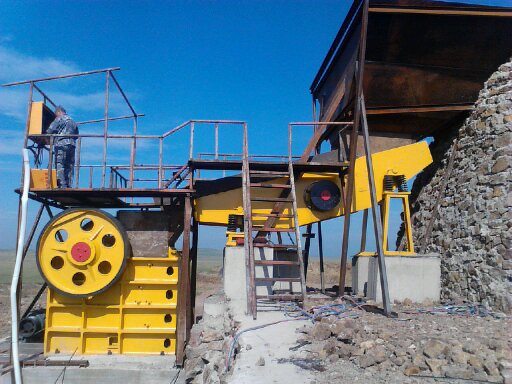
The available project photograph shows a jaw crusher and its feeding structure at the installation site. It provides a visual reference for the equipment arrangement and the practical application of primary crushing machinery in granite processing.
Detailed commissioning records, measured production results and customer operating data are not currently available for publication. Further technical details can be confirmed according to the actual project requirements.
Related Project Cases
250 TPH Granite Crushing Plant in Nigeria | LBZG Crusher
Material: Granite
Located in Nigeria, this…
View Project →
50–80 TPH Granite Mobile Crushing Plant | LBZG Crusher
Material: Granite
This 50–80 TPH mobile gr…
View Project →
200 TPH Gold Ore Crushing Plant in Saudi Arabia | LBZG Crusher
Material: Gold Ore
This 200 TPH gold ore cr…
View Project →