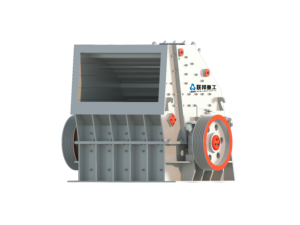
Compression crushing
reduces stone between fixed and movable jaw plates.

PEX series jaw crusher for secondary stone crushing. Compare model specifications to select suitable feed and discharge sizes for your crushing plant.
Tell us your material, feed size and target capacity for model selection.
The PEX Series Jaw Crusher is designed for secondary and fine crushing of various ores and rocks. It is widely used in mining, quarrying, aggregate production, construction materials, and mineral processing industries.
Featuring a compact structure, reliable performance, and adjustable discharge size, the PEX jaw crusher provides efficient material reduction and consistent output for downstream processing.
The PEX Series Jaw Crusher is commonly used for crushing limestone, granite, basalt, quartz, iron ore, and other materials within the machine’s specified operating limits.
It can be integrated with vibrating feeders, conveyors, vibrating screens, and other crushing equipment to form a complete stone crushing and screening production line.
Shandong Lianbang Heavy Industry (LBZG) provides crushing and screening equipment for mining, quarrying, and aggregate production projects. We help customers select suitable crushing solutions based on material characteristics, required capacity, and final product size.
Contact LBZG to discuss your project requirements and request technical specifications or a quotation.


The PEX series jaw crusher is suitable for secondary crushing in stone processing and aggregate production plants. It can receive appropriately sized material from a primary crusher and reduce it before further crushing or screening.
Consider a PEX model when your plant requires an additional crushing stage and its feed size, discharge adjustment range and capacity match your project. For an existing production line, check compatibility with the upstream crusher, feeder and downstream screen before selecting equipment.
The PEX series jaw crusher is designed for secondary crushing in stone crushing and aggregate production plants. It reduces suitably sized material from an upstream crushing stage before further crushing or screening.
Potential applications include processing granite, basalt, limestone and river stone, subject to assessment of material hardness, abrasiveness, moisture and feed size. Model selection should match the required throughput, discharge setting and downstream equipment. Refer to the model-specific technical specifications below and send LBZG your project requirements for selection assistance.
The motor drives the eccentric shaft through a belt transmission, causing the movable jaw to move towards and away from the fixed jaw. Material enters the crushing chamber from above and is compressed between the two jaw plates.
As the movable jaw moves away, crushed material moves down through the chamber and exits through the bottom discharge opening. The discharge setting influences the output size and capacity. Screening may be required to obtain specified final aggregate sizes.
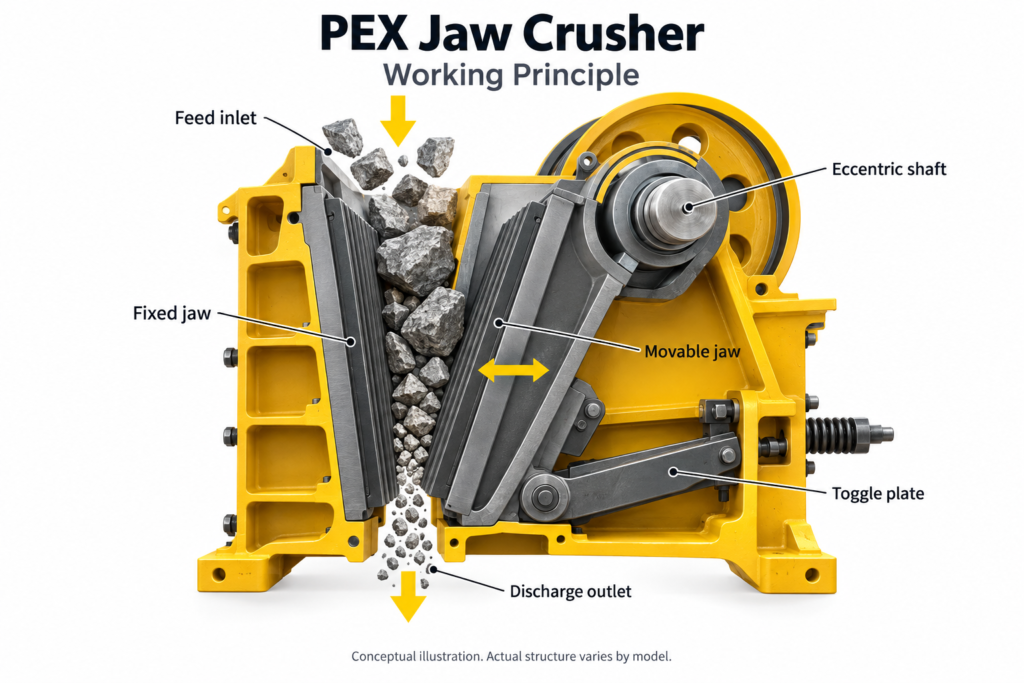
reduces stone between fixed and movable jaw plates.
supports adjustment within the selected model's specified range.
select equipment using the catalogue feed size, capacity, power and other listed specifications.
assess compatibility with feeding, conveying and screening equipment.
include jaw plates and maintenance requirements in the purchasing decision.
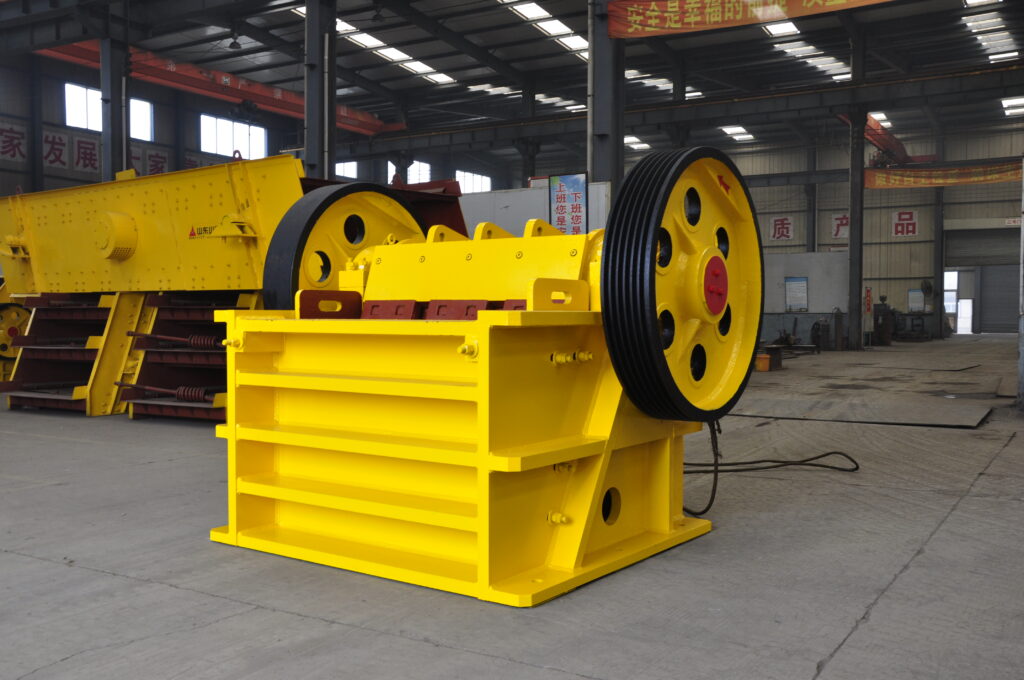
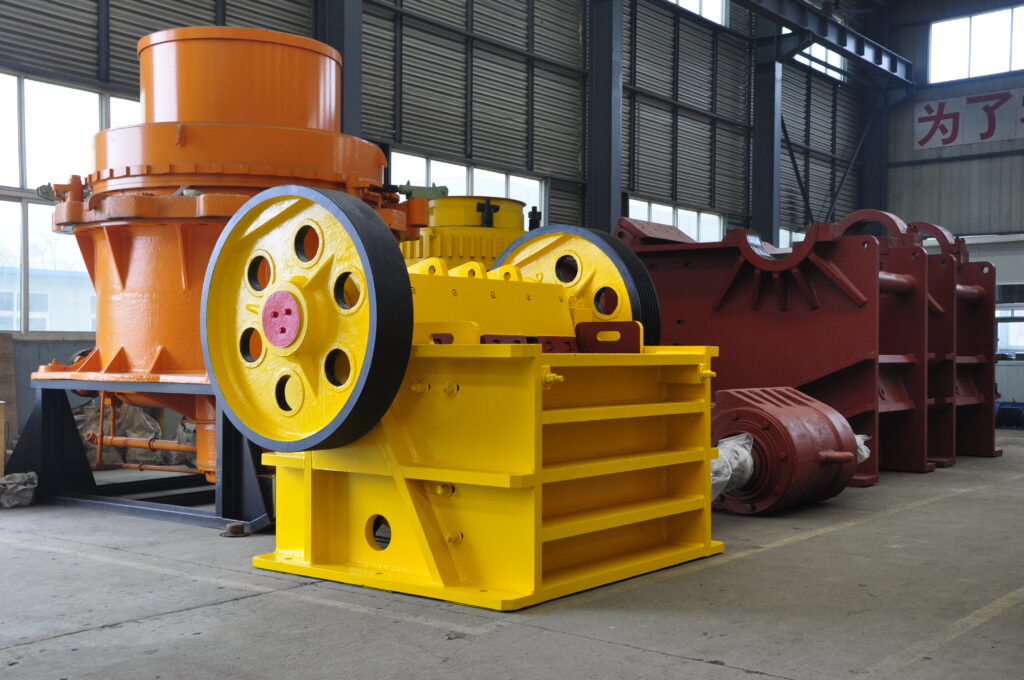
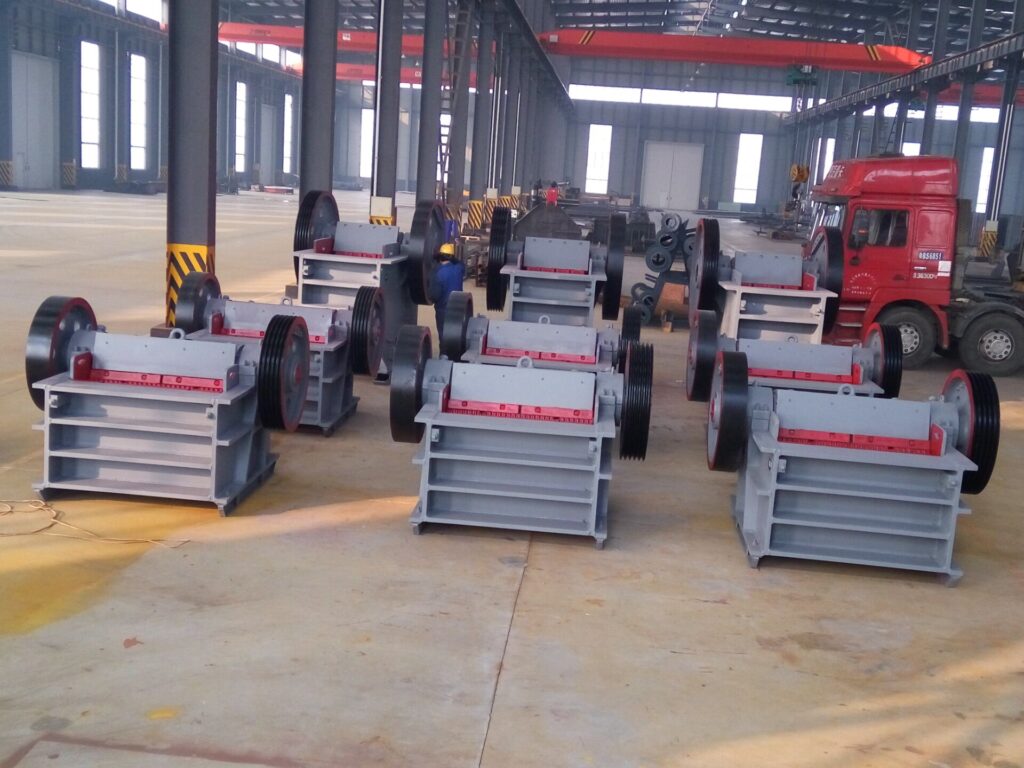
| Model | Feed opening(mm) | Max. feed size(mm) | Output size(mm) | Rotation speed(r/min) | Capacity(t/h) | Power(kW) | Overall dimensions(L×W×H, mm) |
|---|---|---|---|---|---|---|---|
| PEX-150×750 | 150×750 | ≤120 | 18-48 | 320 | 8-25 | 15 | 1240×658×1025 |
| PEX-250×750 | 250×750 | ≤210 | 25-60 | 320 | 15-35 | 22 | 1250×658×1025 |
| PEX-250×1000 | 250×1000 | ≤210 | 25-60 | 345 | 10-40 | 30 | 1340×1925×1400 |
| PEX-250×1200 | 250×1200 | ≤210 | 25-60 | 345 | 15-50 | 37 | 1495×2125×1400 |
| PEX-300×1300 | 300×1300 | ≤250 | 25-90 | 310 | 20-70 | 75 | 1670×2156×1550 |
| PEX-500×1500 | 500×1500 | ≤290 | 25-120 | 300 | 50-150 | 90 | 1880×2660×2105 |
Specifications are for reference only. Performance depends on material properties and operating conditions. Confirm the selected model and configuration with LBZG before ordering.
Ask about a suitable model →provide the stone type, hardness, abrasiveness and moisture conditions to assess suitability and wear requirements.
compare the largest incoming stones with the selected model's maximum feed size. Account for oversized material from the upstream crusher.
specify the target tonnes per hour and operating hours. Assess catalogue capacity against your actual material and feeding conditions.
compare the required discharge setting with the model's adjustment range. Use screening where specified final aggregate sizes are required.
check the upstream crusher, feeder, downstream screen, available electrical supply and installation space to avoid equipment mismatches.
discuss jaw plates, spare parts and maintenance access. Consider material abrasiveness, operating hours and parts availability when assessing operating costs.
Interested in PEX Series Jaw Crusher? Share your project requirements with our team.
Tell us your material, target capacity and required output sizes so we can discuss the equipment and quotation scope.
Send us the material type, maximum feed size, required capacity in tonnes per hour and target discharge size. If you have an existing plant, also provide the upstream crusher and downstream equipment specifications. These details help us assess the suitable model and identify potential bottlenecks in the crushing line.
A PEX jaw crusher is commonly used for secondary stone crushing. It receives suitably sized material from an upstream crusher and reduces it before further processing or screening. Its suitability depends on the material, required throughput and discharge size.
PE jaw crushers are generally used for primary crushing of larger feed, while PEX jaw crushers are commonly selected for secondary crushing with smaller feed and a finer discharge setting. Compare the maximum feed size, discharge adjustment range and capacity of each specific model rather than selecting by the series name alone.
Catalogue capacity is a reference range. Actual throughput depends on material properties, feed size distribution, moisture, feeding conditions and the discharge setting. The discharge adjustment range does not mean every discharged particle will be the same size. Screening, and sometimes further crushing, is needed to produce specified aggregate sizes.
Jaw plates are key wear parts. Their service life depends on material abrasiveness, operating conditions and maintenance. Before ordering, discuss the wear-part specifications and spare-parts requirements for the selected model. During operation, follow the equipment manual for lubrication, inspections and discharge adjustment, and isolate the power before maintenance.
Before each shift, inspect the jaw plates, fasteners, belt condition, guards and lubrication points according to the equipment manual. Keep the surrounding area clear and check for visible damage or loose components.
During operation, maintain controlled feeding and watch for unusual noise, vibration or bearing temperature. Stop the machine and investigate abnormal conditions before continuing operation.
Follow the model-specific manual for lubricant selection, lubrication intervals, discharge adjustment and wear-part replacement. Stop the machine, isolate and lock out the power, and confirm that all moving parts have stopped before inspection or maintenance. Never reach into the crushing chamber while the equipment is running.
Discuss equipment selection and your project requirements with our team.
Confirm installation responsibilities and available guidance for the agreed equipment scope.
Share your equipment model and part requirements to discuss suitable replacements.
Contact LBZG with your material type, feed size, required capacity and project location to discuss equipment selection and quotation requirements.
Before ordering, confirm the scope of supply, technical documentation, spare parts, installation and commissioning arrangements, warranty terms and after-sales support. The agreed services, responsibilities and any additional costs should be specified in the quotation and contract.
Share your material, target capacity and required output sizes.